
Materials We Machine and Fabricate
Choosing the wrong material can end a program before it starts — wrong temper, wrong alloy, or a supplier who cannot hold a certified heat. When engineers and procurement teams bring a new job to Armes Precision, one of the first conversations we have is about material. We have been machining, welding, and fabricating metals and engineered materials since 1995, and that experience means we can work with you to match the right alloy to the demands of your application — not just quote whatever you put on the drawing.
Below is an overview of the material families we routinely process, the specific grades we see most often, and why each matters for the industries we serve.
Aluminum

Steel and Stainless Steel
Plastics and Fiberglass
Titanium
Copper, Brass, and Bronze
Inconel, Monel, and Hastelloy
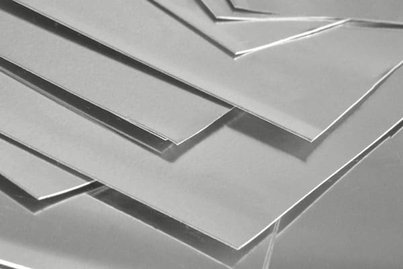
Aluminum
Aluminum is the highest-volume material we run at Armes Precision, and for good reason: it machines quickly, tolerates aggressive feeds and speeds, and produces a predictable surface finish without the thermal management challenges you face with steel or titanium. For aerospace structures, industrial automation frames, and commercial food equipment, aluminum covers a wide range of applications.
The three alloys we process most often:
- 6061-T6 — the general-purpose workhorse. Magnesium-silicon chemistry gives it good weldability, solid corrosion resistance, and a tensile yield of roughly 40 ksi. Default choice when there is no strong reason to reach for something else.
- 7075-T651 — the high-strength option. Zinc-alloyed 7075 reaches 73 ksi yield strength through precipitation hardening, which is why it appears in wing ribs, structural brackets, and other load-bearing aerospace structures. Less corrosion-resistant than 6061 and harder to weld, but few alloys match its strength-to-weight ratio.
- 2024-T351 — favored for high-cycle fatigue applications such as fuselage frames and wing skins. Highly machinable and strong, but not weldable — requires cladding or anodizing for corrosion protection.
We machine aluminum on our CNC milling and turning centers, and our laser cutting and metal forming capabilities extend to aluminum sheet and plate work.
Steel and Stainless Steel
Steel and stainless steel cover a wide range of structural and corrosion demands. The right grade depends on the loading, the operating environment, and whether the part will be welded. Our team is comfortable with the full range, from free-machining carbon steel to the precipitation-hardening grades that define aerospace hardware.
Common grades we process:
- 4140 alloy steel — a chromium-molybdenum grade with excellent toughness and fatigue resistance. Used for shafts, gears, tooling, and machine structural components. Heat treated to 28-34 HRC for most structural applications.
- 304 / 316 stainless steel — austenitic grades for applications where corrosion resistance matters more than ultimate strength. 316 adds molybdenum for superior resistance in marine and chloride-heavy environments and is FDA-compliant for food contact — relevant to the commercial food equipment OEMs we serve.
- 17-4 PH stainless steel (AMS 5604) — a precipitation-hardening grade that heat-treats to over 170 ksi tensile strength while retaining corrosion resistance to 1,100 degrees F. Standard material in aerospace valve bodies, actuator components, and NAVSEA naval hardware.
- ASTM A572 Grade 50 — a high-strength low-alloy (HSLA) structural steel with a 50 ksi minimum yield strength. Weldable, widely available, and cost-effective for structural weldments, frames, brackets, and fabricated assemblies in industrial, conveyor, and power generation applications where the strength-to-cost ratio matters more than corrosion resistance.
- HY-100 — a quenched-and-tempered high-yield steel (MIL-S-16216) with 100 ksi minimum yield strength, developed for submarine hull and naval vessel construction. NAVSEA qualification requirements govern welding procedures, filler metal selection, and preheat to prevent hydrogen-induced cracking in this high-carbon-equivalent steel. Armes Precision holds NAVSEA-qualified welding procedures for HY-100, and our team has published a detailed breakdown of those requirements on our blog.
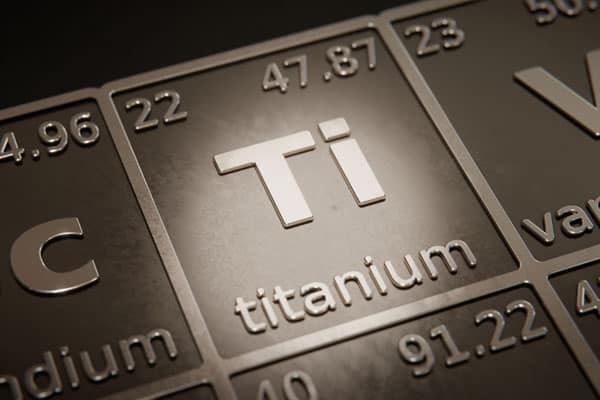
Titanium
Titanium’s strength-to-weight ratio is the reason it shows up in airframes, engine components, and naval hardware. Ti-6Al-4V (Grade 5) accounts for roughly 50% of all titanium production globally and is the grade we machine most often at Armes Precision.
Grade 5 titanium yields approximately 130 ksi at room temperature, weighs about 60% less than steel by volume, and maintains its mechanical properties up to roughly 800 degrees F. It is also corrosion-resistant in seawater, which matters for the NAVSEA-regulated programs we support.
The tradeoff is machinability. Titanium’s low thermal conductivity concentrates heat at the cutting edge rather than dissipating it through the chip. Machining titanium requires slower surface speeds, sharp tooling, and aggressive coolant strategies. Our team has the toolpath knowledge and machine capability to hold tight tolerances on titanium parts without burning through tooling. We also process Grade 2 commercially pure titanium for applications requiring maximum corrosion resistance at lower strength.
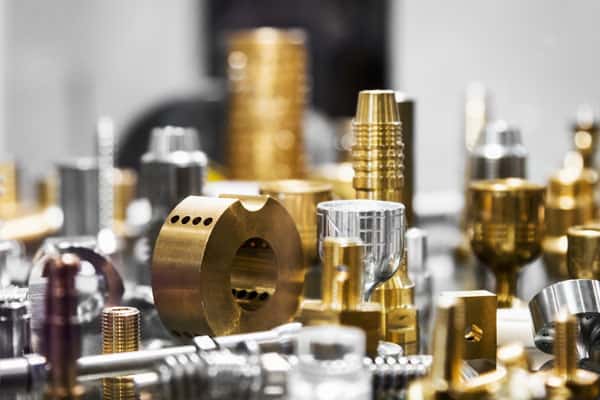
Copper, Brass, and Bronze
Copper-family alloys are the choice when electrical conductivity, bearing performance, or galling resistance is the design driver.
- Copper C110 — 99.9% pure electrolytic-tough-pitch copper, maximizing electrical and thermal conductivity. Used for bus bars, heat sinks, and electrical components in power generation and industrial automation.
- Brass C360 — free-machining brass is one of the most easily cut materials available, making it cost-effective for high-volume turned parts, fittings, and valve bodies.
- Bronze C932 bearing bronze — a tin-bronze alloy with excellent wear resistance and self-lubricating properties. Standard choice for bushings, thrust washers, and wear surfaces in conveyor systems and industrial automation equipment.
Copper Tungsten
Copper tungsten (CuW) is a sintered pseudo-alloy produced by infiltrating a porous tungsten skeleton with copper. The result combines copper’s electrical and thermal conductivity with tungsten’s high melting point (3,422 degrees C), hardness, and arc-erosion resistance. No single-element metal delivers both properties simultaneously, which is why CuW occupies a niche that neither material can fill alone.
The two grades we see most often:
- W80Cu20 — 80% tungsten / 20% copper. Preferred for EDM electrodes where erosion resistance and electrode accuracy are the priority. Used to machine hardened steels, superalloys, and complex cavity features that would be impractical to cut directly.
- W70Cu30 — higher copper content increases thermal conductivity, making this grade the choice for heat sinks, thermal management substrates, and electrical contacts in defense electronics and power systems.
Copper tungsten machines cleanly with carbide tooling at moderate speeds, though its high density (roughly 15-17 g/cm3) means setups must account for workholding loads that would be irrelevant on aluminum or steel of the same form factor.
Inconel, Monel, and Hastelloy
Nickel-based superalloys are specified when a part must perform under extreme heat, corrosive media, or both — and when no other material will do. They are also among the most challenging materials to machine correctly. Armes Precision machines these alloys on dedicated setups, with our AS9100D quality system providing full traceability from certified material test reports (CMTRs) through the finished part.
- Inconel 718 (AMS 5664) — the most commonly machined superalloy in aerospace. Maintains tensile strength above 180 ksi at elevated temperatures; used for turbine discs, exhaust hardware, and structural components subject to thermal cycling. Inconel 718 scores approximately 12% on the AISI machinability index — roughly one-eighth the ease of carbon steel — so toolpath strategy and tooling selection are critical to holding tolerance and controlling cost.
- Inconel 625 — high-temperature strength paired with exceptional corrosion resistance in seawater, salt air, and aggressive chemicals. Often specified for marine and chemical process components.
- Monel 400 — a nickel-copper alloy with outstanding resistance to seawater corrosion and sulfuric acid. Common in naval fittings, pump components, and marine hardware.
- Hastelloy C-276 — among the most corrosion-resistant alloys available, with resistance to both oxidizing and reducing acids. Used in chemical processing and demanding industrial applications.
Graphite
Graphite is machined at Armes Precision primarily for EDM (electrical discharge machining) electrodes. It is the dominant electrode material for EDM because of its high electrical conductivity, ease of machining, and ability to hold fine detail — a graphite electrode is milled to the desired geometry, then used to erode that geometry into hardened tool steel, titanium, or a superalloy that would be impractical to cut with conventional tooling.
Key characteristics that make graphite well-suited for precision electrode work:
- Ultra-fine grain grades — particle sizes of 1-3 microns allow sharp corners, thin walls, and surface finishes that coarser grades cannot achieve. Required for precision aerospace tooling and mold cavities.
- Thermal stability — high thermal conductivity dissipates cutting heat without dimensional distortion, which matters when holding electrode accuracy to +/-0.001 inches.
- Minimal burr formation — graphite fractures rather than deforms at the cutting edge, producing clean chip evacuation with no burr that would alter electrode geometry.
Beyond EDM, graphite appears in aerospace thermal protection system components, rocket motor nozzles, and high-temperature crucibles. Graphite machining produces fine, electrically conductive dust, so our team runs graphite jobs on dedicated setups with proper filtration — a detail that matters for both machine health and part cleanliness.
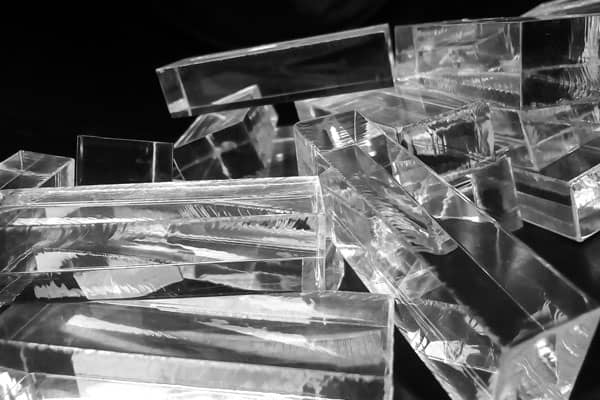
Plastics and Fiberglass
For components that require electrical insulation, chemical resistance, or reduced weight, we machine engineered plastics and fiberglass composites. These are common in conveyor, industrial automation, and control system applications — with one notable exception that extends well into aerospace.
- Vespel (DuPont SP-1 / SP-3) — a direct-formed polyimide rated for continuous use at 550 degrees F (288 degrees C), the highest continuous-use temperature of any unfilled engineering plastic available in rod or tube stock. Unlike PEEK or Delrin, Vespel does not soften as temperature rises; its mechanical properties remain essentially flat from cryogenic temperatures to operating limits, then the material undergoes thermal decomposition above 400 degrees C rather than melting. It machines similarly to soft metals and holds tolerances of +/-0.001 inches when properly fixtured. Vespel appears in aerospace bearing pads, thrust washers, seal rings, and bushing applications in engine hot sections where no other plastic survives. Material cost is high — it is specified when the temperature and dimensional requirements leave no alternative.
- PEEK — a high-performance thermoplastic rated to 480 degrees F, increasingly specified in medical and aerospace applications where metal is too heavy or electrically conductive.
- Delrin (acetal / POM) — excellent dimensional stability, low friction, and easy machinability. Used for gears, bushings, and wear surfaces.
- UHMW polyethylene — impact-absorbing and self-lubricating; the standard material for conveyor wear strips and guide rails.
- G-10 / FR4 fiberglass — for electrical insulation panels and structural components in control systems and power generation hardware.
Frequently Asked Questions
What aluminum alloy should I specify for an aerospace structural bracket?
For most load-bearing brackets, 7075-T651 is the starting point if the design requires high yield strength. If the part will be welded or if cost is a constraint, 6061-T6 is the better choice. Share your load case and operating environment with our team and we will help you evaluate the tradeoff, including whether anodizing or other surface treatment is needed.
Can Armes Precision source certified material, or does the customer need to supply it?
We can source most common alloys with mill certifications (CMTRs) through our supplier network, including AMS-spec and DFARS-compliant material. For specialty materials or contracts with specific heat and lot traceability requirements, we also accept customer-furnished material (CFM).
Do you machine Inconel and other superalloys?
Yes. We machine Inconel 718, Inconel 625, Monel, and Hastelloy on our CNC milling and turning centers. These materials require dedicated setups with slower parameters and specialized tooling. Our team accounts for these factors in quoting and job planning, and our AS9100D system maintains full material traceability throughout.
What is DFARS-compliant material and when is it required?
DFARS Part 252.225-7009 requires that specialty metals used in defense articles be melted or produced in the United States or a qualifying country. If your contract flows down DFARS compliance requirements, our team can source and document qualifying material and provide the required certifications.
Do you machine graphite and copper tungsten for EDM electrodes?
Yes. We machine both graphite and copper tungsten for EDM electrode applications. Graphite is our standard electrode material for most EDM work — it holds fine detail and machines efficiently. Copper tungsten is specified when the application demands higher erosion resistance or where electrode geometry and EDM parameters favor a denser material. Both are run on dedicated setups to manage the specific chip and dust characteristics of each.
What if my design calls for a material not listed here?
Contact us. If your drawing calls for Kovar, Invar, MP35N, A286, or another specialty alloy or engineered material, we will assess machinability, source the material through our distribution network, and let you know whether any process adjustments affect lead time or cost. We have worked with a wide range of materials — including specialty graphite grades, copper tungsten composites, and high-performance polymers like Vespel — across aerospace, defense, and industrial programs for over three decades.
Work With a Manufacturer That Knows the Material
Material selection is an engineering decision, not a box to check. The wrong grade, the wrong supplier, or a non-compliant heat affects cost, schedule, and whether the part performs in service. Armes Precision has machined, welded, and fabricated these materials across aerospace, defense, industrial, and commercial programs for over 30 years, with AS9100D and ISO 9001:2015 quality systems to back every job.
Contact Armes Precision today to discuss your material requirements and request a quote.