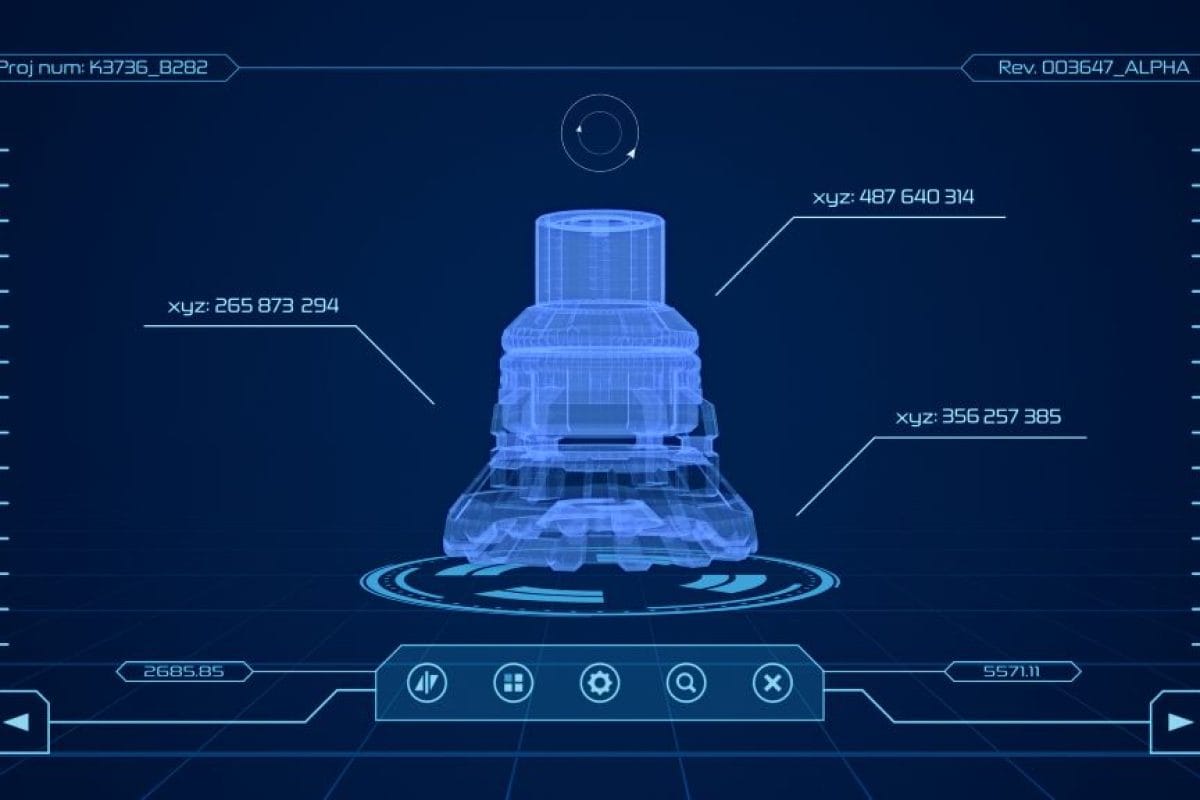
In precision manufacturing, accuracy and efficiency are essential for successful outcomes. At Armes Precision, CAD software plays an important supporting role in mechanical assembly production – not as a design tool created in-house, but as a reference and analysis tool provided by customers. Mechanical assembly production involves manufacturing individual components and assembling them into fully functional systems, and accurate CAD models help guide this process from start to finish.
Rather than developing CAD models internally, Armes Precision relies on customer-supplied CAD files to understand design intent, dimensional requirements, and assembly relationships. These models serve as a visual and technical roadmap that helps ensure manufactured parts meet exact specifications.
Mechanical Assembly Production Explained
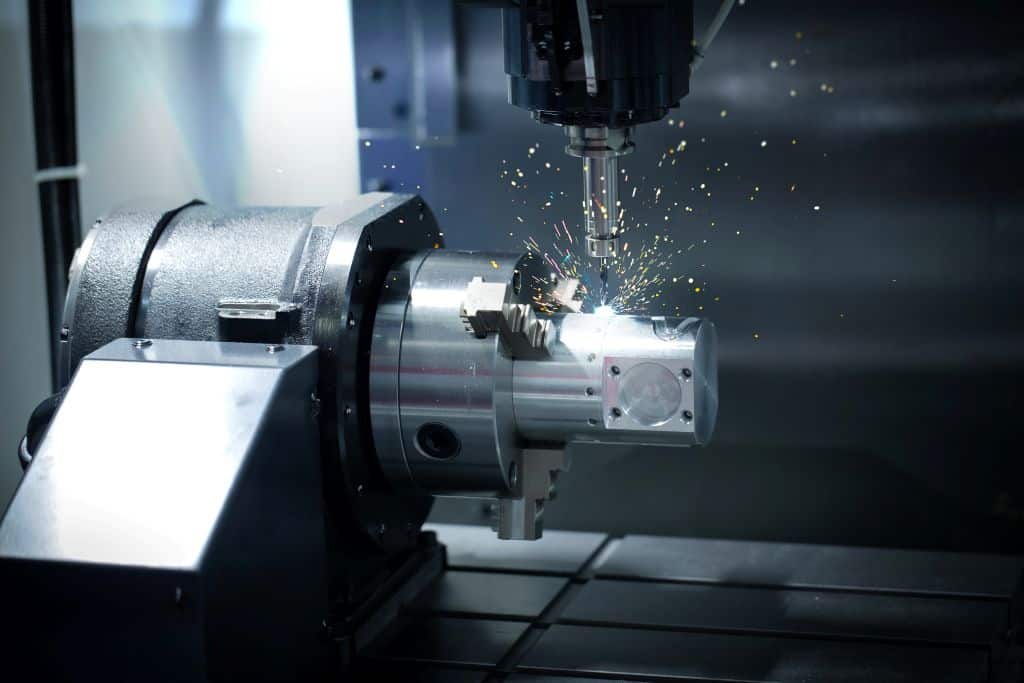
Mechanical assembly production refers to the process of manufacturing individual components and assembling them into complete, functional systems. This includes precision machining operations such as milling, turning, cutting, and forming, followed by careful fitting, fastening, and inspection during assembly.
The goal of mechanical assembly production is to deliver assemblies that perform reliably in real-world operating conditions. Each component must be manufactured within tight tolerances so it integrates seamlessly with mating parts. Even small deviations can lead to performance issues, increased wear, or costly rework.
At Armes Precision, mechanical assemblies range from small, high-tolerance components for medical and industrial applications to larger assemblies used in aerospace, defense, and automotive industries. Regardless of size or complexity, successful mechanical assemblies rely on a disciplined, step-by-step process:
Review and analysis of customer-supplied CAD models
Precision machining of individual components
In-process and final quality inspections
Assembly of components into functional subassemblies
Final assembly, verification, and testing
By maintaining strict quality control and using CAD models as a guiding reference, Armes Precision consistently produces dependable mechanical assemblies that meet customer and industry requirements.
How CAD Aids Mechanical Assembly Production
While Armes Precision does not design parts or generate CAD models, CAD software still plays a vital role in manufacturing and assembly operations. Customer-provided CAD files help guide production decisions, reduce uncertainty, and improve overall efficiency.
Interpreting Customer Design Intent
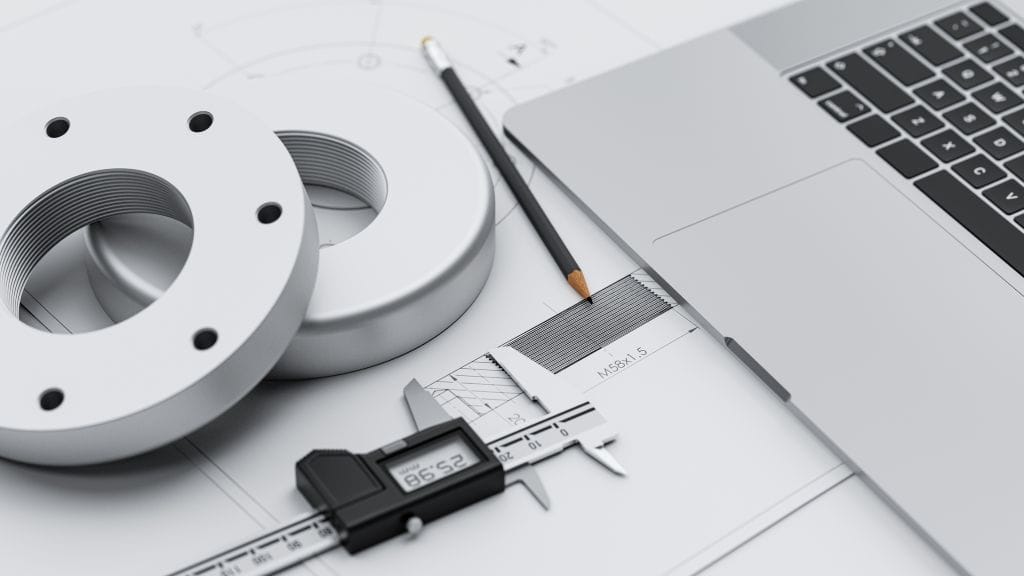
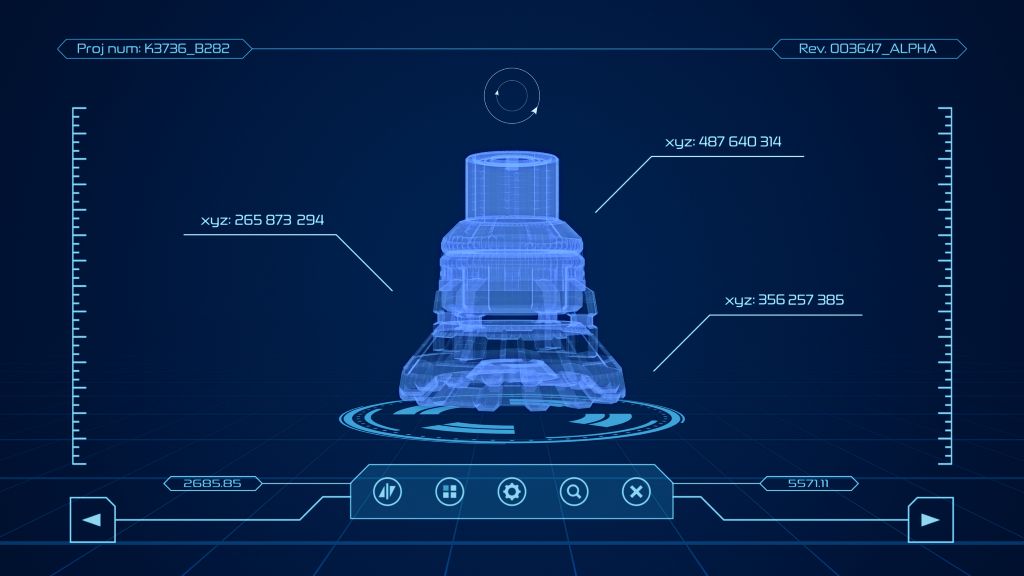
CAD models provide a clear visual representation of how a part or assembly is intended to look and function. By reviewing 3D models and associated drawings, the Armes Precision team gains a detailed understanding of dimensions, tolerances, mating features, and critical interfaces.
This analysis helps ensure that machining and assembly processes align with the customer’s design requirements. CAD files reduce ambiguity and allow production teams to identify potential challenges early, before material is cut or parts are assembled.
Verifying Fit and Assembly Relationships
Customer-supplied CAD models make it easier to understand how individual components interact within a larger assembly. By reviewing how parts fit together digitally, Armes Precision can anticipate alignment concerns, clearance issues, or tight tolerance stack-ups that may affect assembly.
This proactive review helps minimize surprises during physical assembly, reducing delays and rework while improving first-pass success rates.
Supporting Efficient Assembly Planning
CAD files also assist with planning efficient assembly sequences. By understanding how components are oriented and fastened together, the production team can determine the most logical build order and identify any special tooling or fixturing requirements in advance.
This preparation streamlines shop-floor operations, improves consistency, and reduces overall production time—especially for complex or multi-part assemblies.
Improving Communication and Documentation
CAD models serve as a shared reference point across machining, assembly, and quality teams. Clear visual information helps ensure everyone is working from the same understanding of the part or assembly requirements.
In addition, CAD-based drawings and documentation provided by customers support inspection planning, tolerance verification, and quality assurance processes. This alignment reduces miscommunication and helps maintain consistent quality throughout production.
Improved Collaboration Across Teams
CAD technologies support clearer communication across engineering teams, machinists, fabricators, welders, and quality assurance professionals. Detailed 3D models clearly communicate design intent and technical specifications. This simplifies collaboration among groups working on different facets of complex assemblies.
Sharing these digital designs seamlessly among various departments reduces misinterpretation risk significantly. Our shared understanding of precise requirements improves overall project management effectiveness at every step in our mechanical assembly process.
Ensuring Accuracy and Reliability in Mechanical Assemblies
CAD software plays a crucial supporting role in mechanical assembly production by providing clarity, consistency, and confidence. At Armes Precision, customer-provided CAD models are carefully reviewed and analyzed to guide machining and assembly processes—not to redesign parts, but to manufacture them accurately and efficiently.
With decades of experience in precision machining and mechanical assembly, Armes Precision serves industries such as aerospace, defense, automotive, medical, and industrial manufacturing. By combining skilled craftsmanship, rigorous inspection, and careful use of CAD as a reference tool, the company delivers assemblies built for performance and longevity.
Looking for a reliable, experienced, and highly skilled company to manufacture your products? Send an RFQ (request for a quote) today.